Project Type: TOURING EXHIBITION

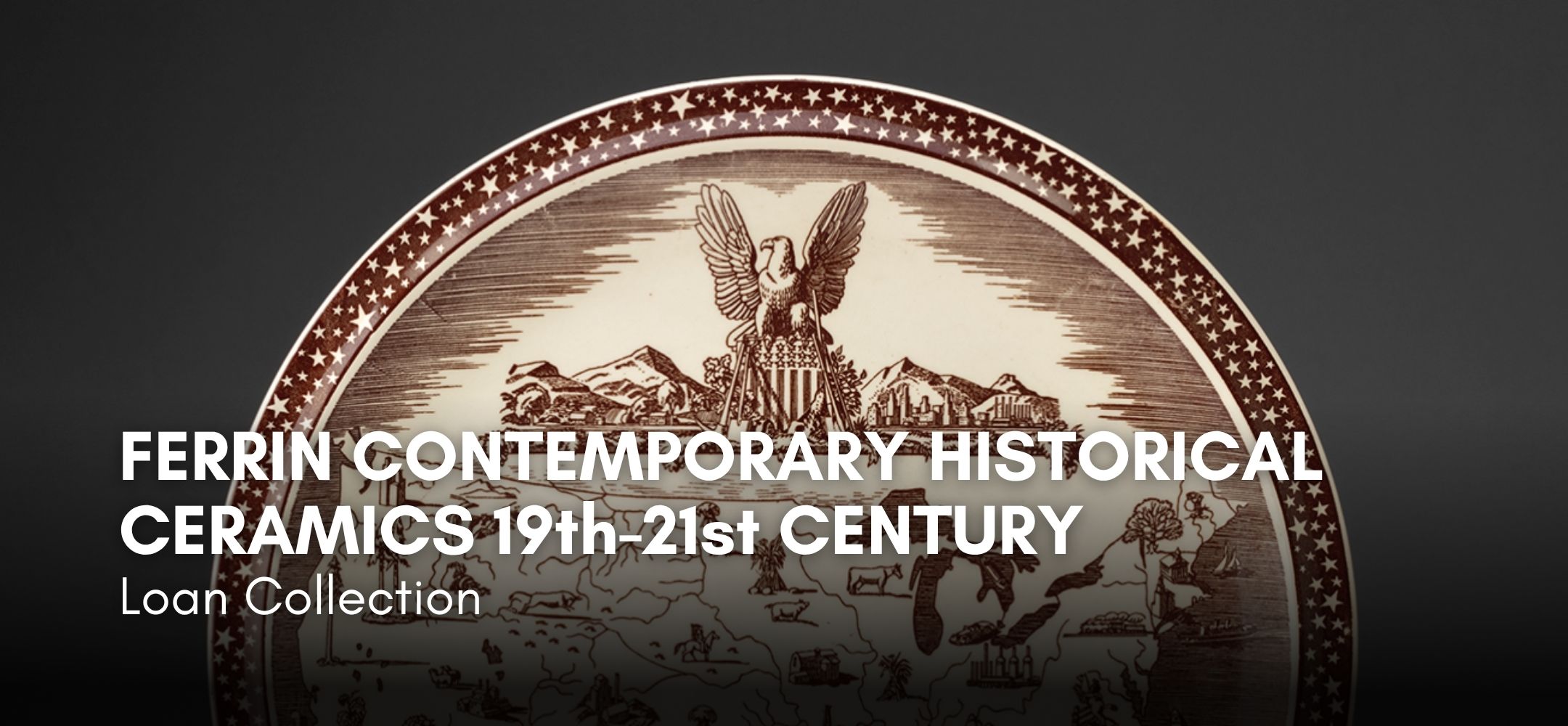
LOAN COLLECTION: Ferrin Contemporary Historical Ceramics 19th-21st Century

LOAN COLLECTION: Ferrin Contemporary Historical Ceramics 19th-21st Century

ABOUT THE FERRIN CONTEMPORARY HISTORICAL COLLECTION

Works from Ferrin Contemporary’s Resources and Collections are lent to museum exhibitions that feature works by contemporary artists represented by the gallery. The collection began decades ago with souvenir plates and developed further when sourcing material for Paul Scott to use in his New American Scenery series. The series is now on tour at museums that invite Paul to collaborate as an artist curator to select works from their permanent collections to be shown in context with his prints on ceramics, photogravures and re-animated historic transferware. An Enoch Woods, Cape Coast Castle platter depicting the slave trade in Africa was first found by Paul when researching the transferware collection at RISD Museum. A copy of that platter is available for loan and is included in his comprehensive show at the Albany Institute of History and Art.

At Ferrin Contemporary, the exhibition Our America/Whose America?  invited artists to respond to this collection with newly created and recent works that directly questioned the presumptions conveyed by the historic material.  At Norman Rockwell Museum feature in Imprinted: Illustrating Race is a case of ceramic, glass and other manufactured objects in conversation with contemporary works by Elizabeth Alexander, Garth Johnson and Paul Scott.  The collection includes souvenir objects and plates, designed and produced in England in the 19th and early 20th century, Made in Occupied Japan, and later produced in America. The series produced by Vernon Kilns designed by Rockwell Kent and Gale Turnbull “Our America” is featured in the two exhibitions on view in 2022.

Looking around at the contemporary exhibition landscape, we are in a moment of reflection. In museums and galleries throughout the Americas, artists are using found objects and repurposing materials in their work. Likewise, museum curators are looking at their permanent collections to both critique the featured content and question the paths of patronage and origin stories. Diversifying permanent collections to address past gaps and omissions through new acquisitions of works by women and artists of color.  Commissioning contemporary artists to produce site responsive works or supporting their practice by placing them in the role of artist-curator is providing opportunities for scholarship and engagement with new audiences. Together as we all reflect on the past by examining what was hidden in plain sight, we move forward, informed of the forces that still impact our lives today.

Leslie Ferrin, Director of Ferrin Contemporary, Collector

IN EXHIBITIONS | RECENT LOCATIONS

American Stories: From Revolution to Rockwell

NORMAN ROCKWELL MUSEUM

9 Glendale Road, Stockbridge, MA

June 6, 2026 – October 26, 2026

INSTALLATION PHOTOS | Coming soon…

IMPRINTED:ILLUSTRATING RACE

DELAWARE ART MUSEUM

2301 Kentmere Pkwy, Wilmington, DE

October 18, 2025  –  March 1, 2026

INSTALLATION PHOTOS

OUR AMERICA/WHOSE AMERICA?

Wickham House at the Valentine Museum, Richmond, VA

February 20, 2024 – April 21, 2024

INSTALLATION PHOTOS

IMPRINTED:ILLUSTRATING RACE

NORMAL ROCKWELL MUSEUM

9 Glendale Road, Stockbridge, MA

June 11, 2022 – October 30, 2022

INSTALLATION PHOTOS

CONTEMPORARY WORKS

OUR AMERICA/WHOSE AMERICA?

FERRIN CONTEMPORARY

1015 Mass MoCA Way, North Adams, MA

August 6 – October 30, 2022

INSTALLATION PHOTOS

TOURING EXHIBITION: Our America/Whose America?

TOURING EXHIBITION: Our America/Whose America?

ABOUT THE EXHIBITION


EXHIBITION OBJECTIVE

Call and response exhibition between contemporary ceramic artists and commercially produced historic ceramic plates, figurines, and objects placed in conversation with one another. The exhibition can be modified by location to address regional issues relevant to the local communities in which it’s displayed.

EXHIBITION DESCRIPTION

Our America/Whose America? presents a dialogue between contemporary artists and a collection of commercially produced ceramics. This collection of historical objects, collected across the span of several years by Founding Director Leslie Ferrin, is in the form of plates, souvenirs, and figurines from the early 19th through mid-20th centuries. The items were produced in England, Occupied Japan, and various factories in the USA. The exhibition title is chosen from a series of plates produced by Vernon Kiln that features illustrations of American scenes by the painter Rockwell Kent.

In response to this historical collection, contemporary works by participating artists provide new context and interpretation of these profoundly powerful objects. Seen now, decades and in some cases centuries later, the narratives they deliver through image, characterization, and stereotype, whether overt and bombastic or subtle and cunning, form a collective memory that continues to impact the way people see themselves and others today.

EXHIBITION SPECS

EXHIBITION TYPE

  • Group exhibition
  • 15-20 artists

KEY TOPICS

  • American history
  • Call-and-response
  • Critique

TARGET INSTITUTION

  • Historic Institution/home
  • Museums with historic collection

PAST LOCATIONS

  • Ferrin Contemporary, North Adams, MA
  • The Wickham House at the Valentine Museum, Richmond, VA

DURATION | DISPLAY | COSTS & FEES

DURATION OPTIONS

  • RUN TIME 3–12 months
  • ARTIST CONTRACT DURATION (length of loan): 5-15 months


SPACE/DISPLAY REQUIREMENTS

  • REQUIRED DISPLAY TOOLS dependent on location 


COSTS & FEES

  • EXHIBITION FEES variable by exhibition location
  • SHIPPING/LENDING FEES variable by exhibition location
  • INSURANCE COVERAGE The exhibition is fully insured by Ferrin Contemporary at no additional expense to the partner institution, both while installed and during transit.

EVENT OPPORTUNITIES

  • OPENING/CLOSING RECEPTIONS – select artist/curator talks


  • MEET THE ARTISTS – select artists from the exhibition available on site to speak about their work and how it relates to historic content in conversation.


  • GUIDED TOURS from Ferrin Contemporary staff on the history of our historic collection and the contemporary artworks responding to it. 45-60 minute tours.

PRESS

Artistic Landscape: Turning the lens on mass market ceramics Artists respond to problematic histories, racism of commercial ceramics in Our America/Whose America? | Berkshire Eagle | Jennifer Huberdeau | September 17-18, 2022

Works in the show are not confined to ceramic dishes or porcelain plates, although many do use the mediums to spark conversations about colonialism, colonization, racism and sexism.”


Our America/Whose America? at Ferrin Contemporary, North Adams | Ceramics Now | September 19, 2022

“In response to this historical collection, contemporary works by participating artists will provide new context and interpretation of these profoundly powerful objects. Seen now, decades and in some cases centuries later, the narratives they deliver through image, characterization, and stereotype, whether overt and bombastic or subtle and cunning, form a collective memory that continues to impact the way people see themselves and others today.”

RECENT LOCATIONS


ADDITIONAL RESOURCES


ADDITIONAL INSTALLATION PHOTOS BY LOCATION

THE WICKHAM HOUSE AT THE VALENTINE


FERRIN CONTEMPORARY

TESTIMONIALS

“The response was beyond what we imagined; both in the setting, curation, and content, guests were impressed and in awe of the conversation between historical techniques/ideas and contemporary recontextualizations in a deeply historic space. The Valentine staff, which was on-site to tell the history of the historic Wickham House alongside the exhibition, reported over 2,000 recorded attendees during the 3 day NCECA conference. 

Having shown a version of the exhibition in our white-box gallery in 2022, we were excited to hear such positive feedback during and after our tours. It proved to us that Our America/Whose America? could be modified by location to address regional issues relevant to the local communities in which it’s displayed.”

-Isabel Twanmo, Associate Director, Ferrin Contemporary | Our America/Whose America?, Wickham House, The Valentine Museum, Richmond, VA

INQUIRE


If you’d like to open the conversation to show Our America/Whose America? at your institution, please fill out this form to begin the process. We look forward to working with you!

COURTNEY M. LEONARD | BREACH: LOGBOOK 24 | STACCATO

COURTNEY M. LEONARD | BREACH: LOGBOOK 24 | STACCATO

Courtney M. Leonard:
BREACH: LOGBOOK 24 | STACCATO


University Museum of Contemporary Art at UMASS | Amherst, MA
February 14 – May 10, September 19 – December 9, 2024

ABOUT THE EXHIBITION


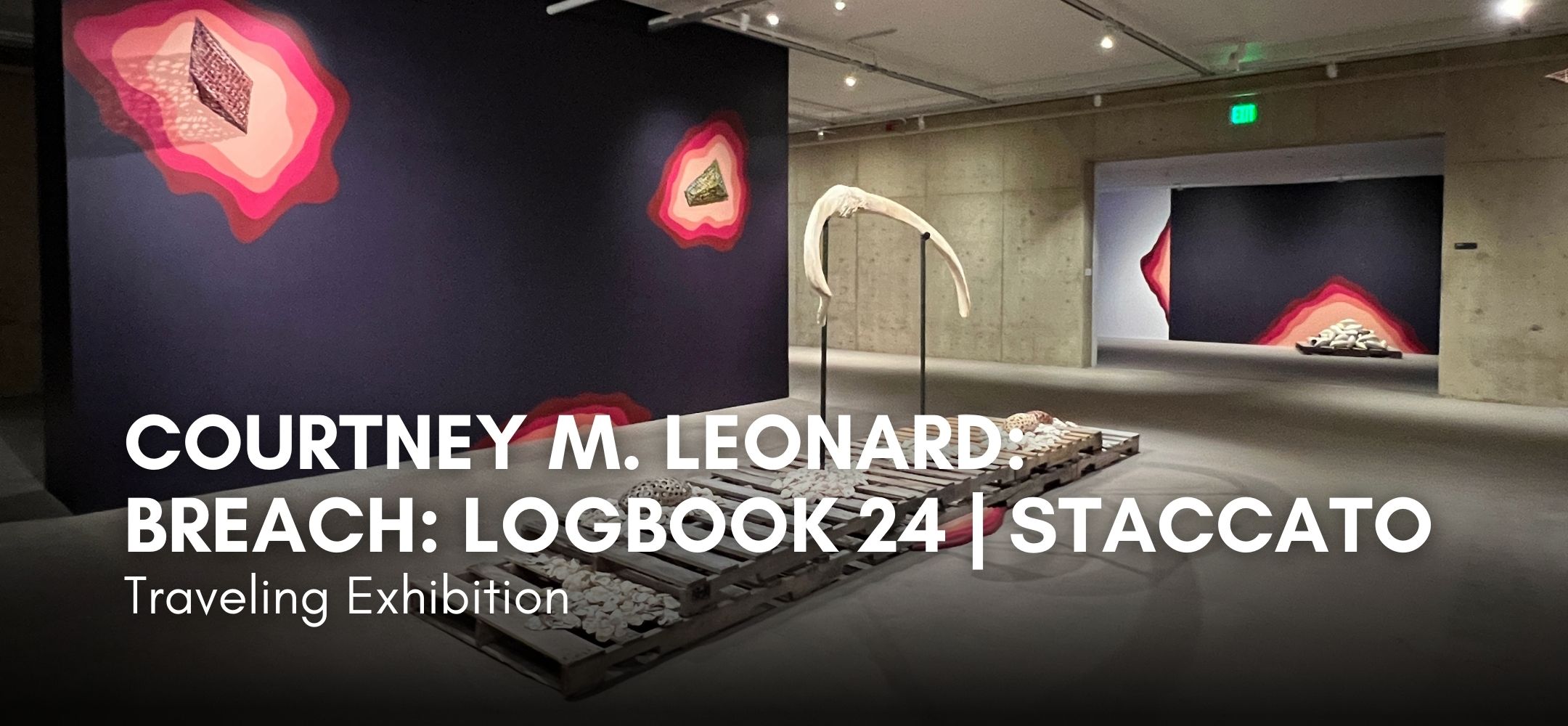
The artist Courtney M. Leonard, a citizen of the Shinnecock Nation of Long Island, explores marine biology, Indigenous food sovereignty, migration, and human environmental impact through visual logbooks that investigate the multiple definitions of the term “breach.”

BREACH: LOGBOOK 24 | STACCATO is the result of a multi-year artist residency initiated by the UMCA in collaboration with the UMass College of Natural Sciences and partially funded by the National Endowment for the Arts. The installation will fill the UMCA’s Main, East and West Galleries. It includes paintings, sculptures, and video exploring the life and kinship ties of Staccato, a North Atlantic Right Whale killed by a ship strike in 1999, whose remains are housed in the UMass Natural History Collections.

BREACH: LOGBOOK 24 | STACCATO was created in partnership with the UMass College of Natural Sciences and is supported by the National Endowment for the Arts, The Office of the Provost, The Class of 1961 Artists’ Residency Fund, the Massachusetts Cultural Council, the UMass Natural History Collections and the UMassFive College Credit Union. Significant research and exhibition contributions came from Kathrine Doyle, staff in the UMass Biology Dept and Vertebrate Collections Manager for the UMass Natural History Collections, Tristram Seidler, Curator of the UMass Herbarium, and Michelle D. Staudinger, Ph.D., UMass Department of Environmental Conservation. Emily Volmar, a UMass undergraduate Natural Resource Conservation major, was a summer Art & Science research assistant for this project. Her work and that of UMass Postdoctoral Researcher Amy Teffer was supported by the Northeast Climate Adaptation Science Center.

EVENTS


OPENING RECEPTION:

Randolph W. Bromery Center for the Arts lobby & UMCA, Amherst, MA 01003
umass.edu/umca

Opening Reception & Talk: Wednesday, February 21 | 5:00 p.m. – 7:30 p.m.
Randolph W. Bromery Center for the Arts, 151 Presidents Drive, Amherst MA

Free and Open to All

5:00 p.m. Artist Talk in Frederick C. Tillis Performance Hall 
All are invited to hear from artist Courtney M. Leonard in conversation with poet Abigail Chabitnoy, Assistant Professor, UMass MFA program for Poets & Writers, in the Frederick C. Tillis Performance Hall.

6:00 p.m. – 7:30 p.m. Reception in Bromery Lobby and UMCA
Enjoy appetizers in the Bromery Lobby and chat with the artist. Meet the scientific team from the UMass College of Natural Sciences who worked on this multi-year collaboration and visit the exhibition in the museum.

RE-OPENING RECEPTION:

September 19, 5:30-8:30pm

5:00pm Artist Talk in Frederick C. Tillis Performance Hall 
UMCA and Bezanson Recital Hall

UMASS ART & SCIENCE CONVENING with COURTNEY M. LEONARD

Tuesday, November 12, 2024 | 5:30-7:30 pm

Join artist Courtney M. Leonard and a panel of UMass scientists for a thought-provoking discussion on the intersection of art and science. Leonard’s exhibition, BREACH: LOGBOOK 24 | STACCATO, currently on view at the University Museum of Contemporary Art, showcases the results of her collaboration with university researchers.

On Tuesday, November 12, they will delve into their collaborative process and share insights into using art as a powerful tool for scientific research and dialogue, particularly concerning climate change and marine biology.

This event is sponsored by the Women for UMass Grants program, dedicated to advancing initiatives that support students and empower women.

Don’t miss this opportunity to learn about how art can influence pressing environmental issues!

Great Hall, Old Chapel
Amherst, MA

ABOUT COURTNEY M. LEONARD


Courtney Leonard Artist Portrait

Courtney M. Leonard is an artist and filmmaker, who has contributed to the Offshore Art movement. Leonard’s current work embodies the multiple definitions of “breach”, an exploration and documentation of historical ties to water, whale and material sustainability.

In collaboration with national and international museums, cultural institutions, and indigenous communities in North America, New Zealand, Nova Scotia, and the United States Embassies, Leonard’s practice investigates narratives of cultural viability as a reflection of environmental record.

Touring Exhibition | NEW AMERICAN SCENERY: The Art of Paul Scott

Touring Exhibition | NEW AMERICAN SCENERY: The Art of Paul Scott

ABOUT NEW AMERICAN SCENERY


Exhibiting internationally since 2019

EXHIBITION OBJECTIVE

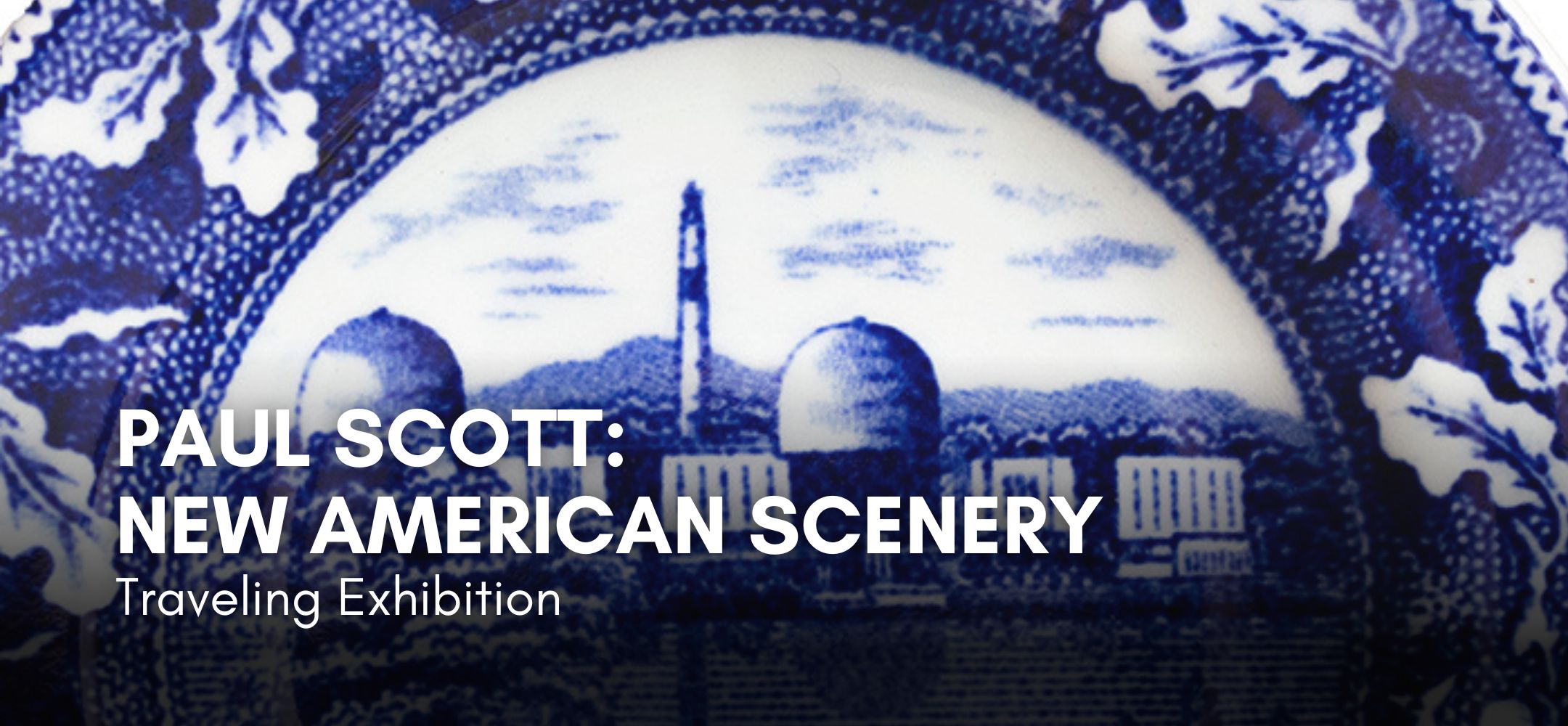
Initially guided by the images depicted in the historic transferware, Paul traveled to cities, explored natural landscapes, met collaborators, and produced a body of work now known as PAUL SCOTT: New American Scenery. First shown in the newly renovated porcelain room at RISD Museum curated by Elizabeth Williams, the exhibition traveled next to Albany Institute of History & Art in 2022 and selected works featured in exhibitions at other locations in both the USA and UK and four open now in the USA.

EXHIBITION DESCRIPTION

In New American Scenery, Scott scrutinizes the American landscape from a contemporary perspective, one that grapples with issues of globalization, energy generation and consumption, capitalism, social justice, immigration, and the human impact on the environment. The images that Scott creates for his ceramics depict unsettling views of nuclear power plants, aging urban centers, abandoned industrial sites, wildfires, and isolating walls. As representations of the American landscape, they suggest a subversion of the picturesque aesthetic—the unpicturesque picturesque—and a new, disturbing norm.

Paul Scott is a leading figure in the international field of ceramics and print. He is known for his manipulation of transfer-printed designs on factory-made domestic tablewares, which thus become vehicles for socio-political commentary. New American Scenery is permeated with his response to the ‘American’ transfer-printed tablewares that were produced in Staffordshire during the first part of the nineteenth century, exclusively for export to America. They have a common format of a central motif framed within an ornamental border and are decorated with imagery that celebrates the new republic. Scott’s New American Scenery work often maintains the same traditional format, while his surface imagery highlights a range of contemporary themes and issues. On the reverse of each piece can be found his maker’s mark, information about the printed edition to which it belongs and his signature; several pieces also offer substantial narrative accounts of the subjects depicted.

Paul Scott: New American Scenery, was made possible by an Artist In Residence grant from the Alturas Foundation, with additional support from Ferrin Contemporary, RISD Museum, Arts Council England, and Albany Institute of History & Art.

EXHIBITION SPECS

EXHIBITION TYPE

  • Solo exhibition

KEY TOPICS

  • American history
  • Environmental
  • Critique

TARGET INSTITUTION

  • Historic Institution/home
  • Museums with historic collection

NAS | RECENT & PAST LOCATIONS


American Scenery and Souvenirs: Transferware by Paul Scott

Lightner Museum
75 King St, St.
Augustine, FL

April 25, 2025 – October 27, 2025

Recall. Reframe. Respond. The Art of Paul Scott

Cincinnati Museum of Art
953 Eden Park Drive
Cincinnati, OH

October 10, 2025 – January 4, 2026

CONFECTED, BORROWED & BLUE: TRANSFERWARE BY PAUL SCOTT

SHELBURNE MUSEUM
6000 Shelburne Road
PO Box 10
Shelburne, VT

May 11, 2024 – October 20, 2024

Pearlware, Polish, and Privilege: Artwork by Paul Scott

LSU MUSEUM OF ART
100 Lafayette Street, Fifth Floor
Baton Rouge, LA

October 27, 2022 to February 26, 2023

Paul Scott: New American Scenery

Albany Institute of History & Art
125 Washington Ave
Albany, NY

August 13, 2022 – December 31, 2022

New American Scenery: Printed Ceramics by Paul Scott at Aberystwyth Arts Centre

Aberystwyth University,
Penglais, Aberystwyth
SY23 3FL
United Kingdom

July 9, 2022 – September 25, 2022

Raid the Icebox Now with Paul Scott: New American Scenery 

RISD MUSEUM
20 N Main St
Providence, RI

September 13, 2019 – December 31, 2021

THE BOWES MUSEUM

Barnard Castle County
Newgate, Barnard Castle
DL12 8NP
United Kingdom

September 26, 2020 – April 11, 2021

ADDITIONAL RESOURCES


New American Scenery Expanded Series Information

NAS includes the following bodies of work, many of which were conceived on location and/or with insights from significant collaborators. Each highlighted title below represents a sub-series containing multiple iterations and/or designs.

Across the Borderline


Series of platters depicting the border between the US and Mexico using imagery culled from the Wedgwood archive and popular media to address the theme of immigration.

READ MORE/VIEW PDF

‘Cumbrian Blue(s) New American Scenery, Across the Borderline (Trumpian Campaigne No:7)’. In-glaze decal collage on Copeland/Spode earthenware platter (c.1895), 434mm x 325mm x 38mm (17″ x 13″x 1.5″). Paul Scott 2021.

Paul Scott, “Cumbrian Blue(s), New American Scenery, Trumpian Campaigne, Legacy No:1, (Across the Borderline, Portland, Black Lives Matter)”, 2021, in-glaze decal collage on pearlware platter (after Enoch Wood), 15.4 x 12.2 x 2″, 39 x 30.5 x 5cm.

The Angola 3


souvenir plate drawing reference to inmates in the Louisiana State Penitentiary who were held in solitary confinement for the longest period in American history. It is suspected that this unethical treatment was retaliation for the inmates’ connection to the Black Panther Party.

Paul Scott, “Scott’s Cumbrian Blue(s), New American Scenery, Angola 3″ 2019, in-glaze screen print (decal) on salvaged Syracuse China with pearlware glaze, 11 x 11 x 1”.

Paul Scott, “Scott’s Cumbrian Blue(s), New American Scenery, The Angola 3″ back, 2019, in-glaze screen print (decal) on salvaged Syracuse China with pearlware glaze, 11x 11 x 1”

Albany (Souvenirs & Views of New York)


souvenir plate of an urban landscape viewed through a roadside screen of trees and brush.

Scott’s Cumbrian Blue(s), New American Scenery, “View of Albany”, 2019, In-glaze screen print (decal) on salvaged Syracuse China with pearlware glaze, 11 x 11 x 1″, 28 cm dia.

Paul Scott, “Scott’s Cumbrian Blue(s), New American Scenery, Near the Oxbow (after Thomas Cole)”, 2019, in-glaze screen print (decal), on shell-edged pearlware platter c.1850, 13.5 x 16.75 x 2″.

Fleur.de.Sel’s New York


series of souvenir plates depicting New York City streetscapes drawn from the Instagram account @Fleur.de.Sel that appear timeless, illustrating the small businesses and cultural diversity that are increasingly at risk with the city’s dangerously inflated wealth gap.

READ MORE/VIEW PDF

“New American Scenery, New York and Transferwares”

In the early part of the nineteenth century, tens of thousands of printed blue and white tablewares from England were exported to North America. Scenes of the newly independent United States were used in a myriad of designs and were characterized by a deep blue semiotic. Alongside printed wallpapers and textiles these transferwares formed part of the new media of their day. Pictorial in nature, their vitrified designs remediated prints from book or magazine illustration, melding them with floral and botanical borders. By the end of the century, they became highly collectible and the subject of a number of books, including RT Haines Halsey’s classic ‘New York on Dark Blue Staffordshire Pottery’. Published in 1899, the limited edition tome plotted the history of the genre, illustrated by sumptuous photogravures in blue depicting a comprehensive range of pictorial transferwares. 120 years later, in my New American Scenery series of artworks I updates some of these early subject matters of New York using 21st century alternatives.

READ MORE/VIEW PDF

Scott’s Cumbrian Blue(s), New American Scenery, “Fleurs.de.sel’s New York”, 2019, (set of twelve plates), In-glaze screen print (decal) on salvaged Syracuse China with pearlware glaze., 11 x 11 x 1″, 11″ or 28 cm diameter (each plate)

Stop, Keat’s & Palm Too… 511 Too… Chicken Place…Mexicana… Laundry Project 23, ChelseaHypermarket, Chelsea Square… Canal Street…. Stairs 361… Hot Dogs…. Village Pizza… Pizza Park… Ray’s Pizza, Jakes Saloon, Meatballs.

California Wildfires


souvenir plate addresses ecological precarity by referencing the most severe wildfire season in California’s history that occurred in 2020.

Paul Scott, “Cumbrian Blue(s), New American Scenery, California Wildfires No:1″, 2019, in-glaze screen print (decal) on partially erased ‘Beauty Spots of California’, Staffordshire souvenir transferware plate, 9.75 x 9.75 x 1.25”.

Back of Paul Scott, “Cumbrian Blue(s), New American Scenery, California Wildfires No:1″, 2019, in-glaze screen print (decal) on partially erased ‘Beauty Spots of California’, Staffordshire souvenir transferware plate, 9.75 x 9.75 x 1.25”.

“Cup Plates”

In the early part of the nineteenth century, transfer printed blue and white tablewares from Staffordshire were exported to North America in their tens of thousands. Pictorial in nature, their vitrified designs remediated print from book or magazine illustration, melding with floral and botanical borders. Scenes of the newly independent United States formed a significant part of this material. These transferwares included ‘Cup Plates’, tiny coasters used to protect furniture from marks whilst the diner drank coffee or tea from the cup’s accompanying saucer. Measuring between 9 to 11 cm (3.5 to 4 inches) across, the plates are characterised by deep cobalt blue prints melted into a pearlware glaze. Images and patterns were sometimes specifically designed and made for the small form, others (above) were collaged from tissue print details of larger patterns. Because of their small scale, flaws in the prints or their application are more obvious than on larger wares and they have their own aesthetic.

READ MORE/VIEW PDF

Cumbrian Blue(s), Indian Point cup plate, 4/50. Transferware print on pearlware cup plate, 104mm. dia. Collaborative work with Paul Holdway (former head of engraving at Spode). Tissue print transfer taken from a copper plate engraved by Paul Holdway, Paul Scott 2021.

Paul Scott, “Cumbrian Blue(s), New American Scenery, Indian Point (detail)

“New American Cites, Flint, Belle Island & The Ghost Gardens of Detroit”

I grew up in Birmingham, Britain’s ‘Motor City’, where the local economy relied on car manufacturers…. Austin, Morris (later British Leyland), Mini, Rover and all the associated motor suppliers. As a student in the early 1970’s, holiday working included ‘industrial cleaning’ in the huge Austin works in Longbridge… then two summers were spent in an engineering factory in Balsall Heath, assembling brake pipe adjuster clamps (amongst other things). When car production eventually ceased in the city, unemployment, and the impoverishment of communities swiftly followed. I clearly recall the dereliction, then later demolition of huge industrial sites, and the yawing empty spaces. A few years later, similar scenes also became familiar to me in the Staffordshire pottery towns as the British ceramics industry all but collapsed. I was thus well aware, from first hand experience, of the effects of deindustrialisation on urban environments and communities. A series of early Cumbrian Blue(s) artworks reflected the ruin and decay of my home town in prints and tiled panels…

READ MORE/VIEW PDF

Paul Scott, “Cumbrian Blue(s), New American Scenery, Detroit Ghost Gardens No:2″, 2019, in-glaze screen print (decal) on salvaged Syracuse China with pearlware glaze, 12 x 12 x 1.25”, 30.48 x 30.48 x 3.18cm.

Paul Scott, “Scott’s Cumbrian Blue(s), New American Scenery, Belle Island Bridge, Detroit” 2019, in-glaze screen print (decal) on salvaged Syracuse China with pearlware glaze, 11 x 11 x 1″.

Pattern Samplers


Paul Scott, “Cumbrian Blue(s), New American Scenery, Pattern Sampler No:4 (Adams)”, 2019, in-glaze decal collage on shell-edge, pearlware platter c.1820, 10 x 13 x 1.5″.

Paul Scott, “Cumbrian Blue(s), New American Scenery, Pattern Sampler No:1″, 2019, in-glaze screenprint (decal) on pearlware shell-edged platter c.1820, 11.75 x 14.75 x 1.5”

Posy Vases


Cumbrian Blue(s) New American Scenery, Set of five posy vases. Comprising, Fleurs de Sel’s New York Canal Street & Village Pizza, Souvenir of Portland (Black Lives Matter) & Selma, Broken Treaties & Leonard Peltier, No Human Being is Illegal & Across the Borderline San Antonio, Fracked & California Wildfires. Each vase 165mm x 125mm x 85mm. Paul Scott 2022.

SERGEI ISUPOV: Alliances

SERGEI ISUPOV: Alliances

Oct. 25 – Dec. 9, 2023

Thorne-Sagendorph Art Gallery
Keene State College
229 Main Street, Keene, NH 03431

ABOUT THE EXHIBITION


SERGEI ISUPOV: Alliances

Isupov’s artworks form alliances with one another as they move between media, explore scale, and are presented in curated exhibitions. Recent opportunities to create public works like his fire sculpture production and performances, along with solo exhibitions that show the full scope of Isupov’s creative versatility and process, have led to new works on paper, prints and wall installations combining ceramics with other materials. To create the signature work in his exhibition ALLIANCES, Isupov began with a square, eight-foot woodcut print created from two plywood panels, carving the image using power tools. His plywood carving and print installation bring together ceramic sculpture, assemblage, and printmaking practices and feature dimensional ceramic elements inserted into the plywood print plate. This display is flanked by two of his large-scale busts, and surrounded with sculptures by the artist known primarily for his ceramic sculptures.

Humanimals is an ongoing series that combines animal features with the standing human figure. Lined up in a promenade in ALLIANCES, they zig-zag facing the same direction, following one another, led by highly detailed, cloaked figural sculptures.

Isupov first created works in the Humanimal series in the early 2000’s in his Richmond, VA studio. Beginning with a set of singular figures in groups, he followed with dual, four-leg sculptures joined together with one body. He periodically returns to the form and scale to explore new ideas or prepare three-dimensional “sketches” for his monumental, multi-part standing sculptures.

Androgyny, the series of large-scale heads and busts, began during a residency at Kecskemét, Hungary in 2008 and led to Isupov’s first solo exhibitions at Ferrin Gallery (Pittsfield, MA), Mesa Contemporary Arts Center (Mesa, AZ) and the Daum Museum of Art (Sedalia, MO) in 2009. His latest work in the series Heritage was produced in 2023 and is featured in dialog with select works from series in the artist’s archive.

More on the exhibition HERE

More About Sergei Isupov  HERE

Inquire  HERE

Isupov is a master of nonlinear narration. Combined with his unmatched, masterful skills as both painter and sculptor, the resulting works draw from the past and reflect on the present.

Semi-autobiographical, Isupov’s intimate narratives interweave poignant representations of men and women, parents and children, shown alongside one another, their pets pointing to the naive sense of security we hold in our daily lives.

These works explore individual, interior landscapes and the continually expanding dualities of the self within complex psychological relationships. Intensely personal yet universal, these works in the context of the present day, remind and call upon us to value, protect and preserve the precarious balance we all stand to lose at any present moment.

Sergei Isupov is an Estonian-American sculptor internationally known for his highly detailed, narrative works. Isupov explores painterly figure-ground relationships, creating surreal sculptures with a complex artistic vocabulary that combines two- and three-dimensional narratives and animal/human hybrids. He works in ceramics using traditional hand-building and sculpting techniques to combine surface and form with narrative painting using colored stains highlighted with clear glaze.

Isupov has a long international resume with work included in numerous collections and exhibitions, including the National Gallery of Australia, Museum Angewandte in Kunst, Germany, and in the US at the Carnegie Museum of Art, Crocker Art Museum, Everson Museum of Art, Fine Arts Museum of San Francisco, Museum of Arts and Design, Museum of Fine Arts–Boston, Museum of Fine Arts–Houston, Mint Museum of Art, and Racine Art Museum. In 2017, his solo exhibition at The Erie Art Museum presented selected works in a 20-year career survey titled Hidden Messages, followed by Surreal Promenade, another survey solo in 2019 at the Russian Museum of Art in Minnesota.

PRESS & PROGRAMMING


OPENING RECEPTION

November 18, 2023, 3-5pm

Free and open to the public

Thorne Sagendorph Art Gallery
Keene State College
229 Main Street, Keene, NH 03431

“My work is about contrasts and relationships. I explore contrasts of human condition with my story lines such as male-female and human-animal relationships, and accompanying emotions of warmth and aggression, love and rejection, and nurture and abandonment. Dynamic and interactive narratives are developed using two and three dimensions at the same time with the sculpted form and painted surface. I use a visual vocabulary and classic tools of design, proportion, perspective and silhouette to both sculpt and paint. Eyes show emotional relationships. Facial and figural gestures develop personalities. Illusionary objects and perspectives suggest motion. As a viewer moves around the work, they see each angle and focus point leading to new chapters and story lines. Combined, these clues tell an overall story.”

Copyright© 2023 and published by Thorne-Sagendorph Gallery, Keene State College, Keene, NH

SERGEI ISUPOV: ALLIANCES
October 25 – December 9, 2023

Catalog Design by Erica Pritchett

All photos by John Polak Photography

Courtesy Ferrin Contemporary

Special thanks to co-curators, Paul McMullan, professor at Keene State College and Leslie Ferrin, director, Ferrin Contemporary and for editorial support by Alexandra Jelleberg, associate director, Ferrin Contemporary.

INQUIRE


Additional works may be available to acquire, but not listed here.

If interested in lists of all works and series: Send us a message

← Back

Thank you for your response. ✨

TOURING EXHIBITION: Imprinted: Illustrating Race feat. the Ferrin Contemporary Historical Collection

TOURING EXHIBITION: Imprinted: Illustrating Race feat. the Ferrin Contemporary Historical Collection

ABOUT THE EXHIBITION


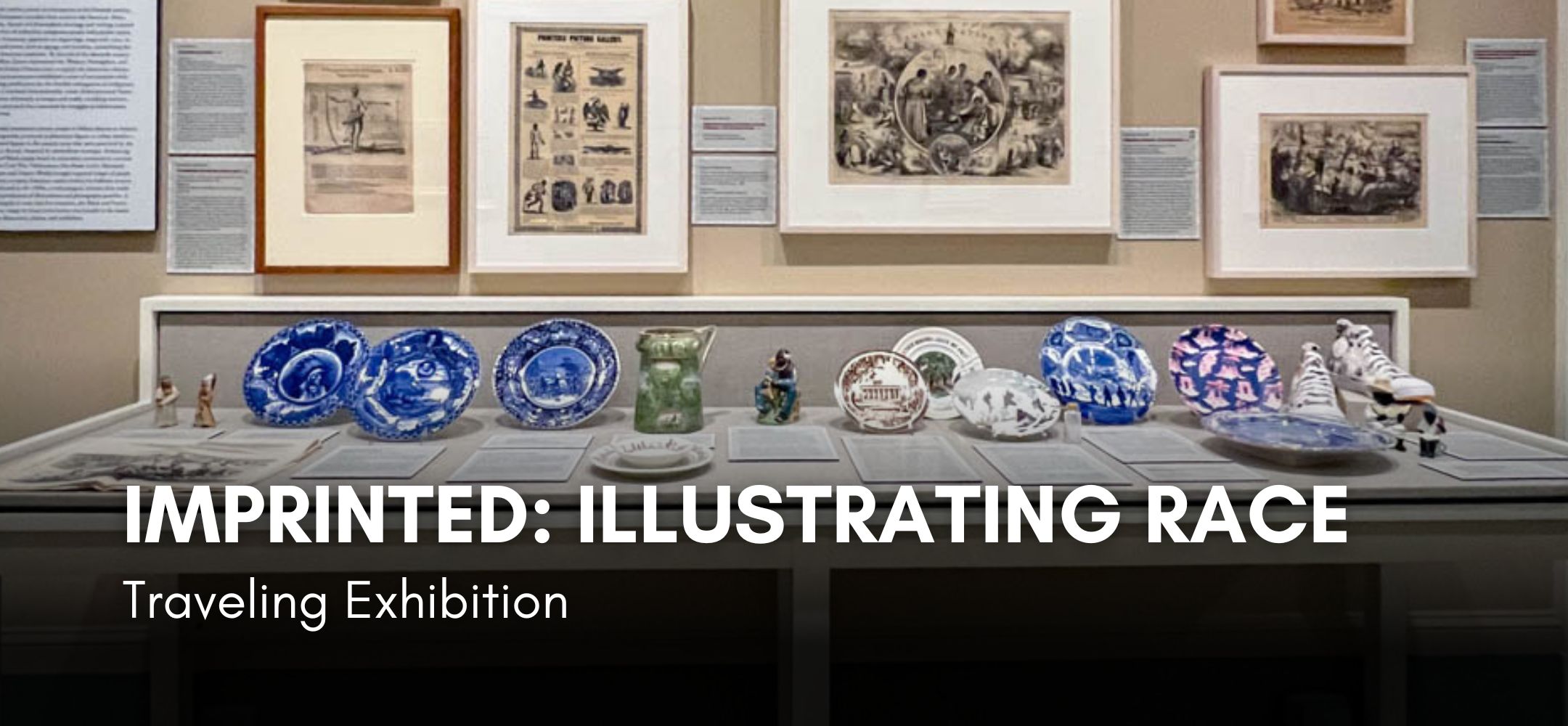
Imprinted: Illustrating Race examines the role of published images in shaping attitudes toward race and culture. Over 300 artworks and objects on view of widely circulated illustrated imagery will be on view, produced from the late eighteenth century to today, which have an impact on public perception about race in the United States. The exhibition will explore stereotypical racial representations that have been imprinted upon us through the mass publication of images. It culminates with the creative accomplishments of contemporary artists and publishers who have shifted the cultural narrative through the creation of positive, inclusive imagery emphasizing full agency and equity for all.

Co-curated by University of Delaware Professor of Visual Communications, and Interim Director of the MFA in Illustration Practice program at Maryland Institute College of Art (MICA), guest Curator Robyn Phillips Pendleton, who has written and spoken widely on the theme of this exhibition, and by noted scholar in American illustration, the Museum’s Deputy Director/Chief Curator Stephanie Haboush Plunkett. They are joined by a distinguished National Exhibition Advisory Committee of 10 academic scholars, curators, and artists with expertise related to the focus of the exhibition’s thesis.

ABOUT THE FERRIN CONTEMPORARY HISTORICAL COLLECTION


Imprinted: Illustrating Race includes works from the Ferrin Contemporary Historical Collection as well as recent contemporary works from Ferrin Contemporary artists. The collection includes souvenir objects and plates, designed and produced in England in the 19th and early 20th century, Made in Occupied Japan, and later produced in America. These objects were exhibited at the Normal Rockwell Museum in the 2023 location of “Imprinted”, and in Ferrin Contemporary’s traveling exhibition, “Our America/Whose America” (2022 & 2024).

“Cumbrian Blue(s) New American Scenery, A Souvenir of Selma AL” by Ferrin Contemporary artist Paul Scott is an example of one of the contemporary works included in Imprinted: Illustrating Race which seeks to reference objects in the Ferrin Contemporary’s Historical Collection. The piece celebrates the 2018 anniversary walk in Selma, AL– the annual even commemorating “Bloody Sunday”, March 7 1965, when John Lewis & Hosea Williams led 525 peaceful civil rights protestors across the bridge in Selma. En-route to Montgomery, they were stopped by State Troopers and Sheriff’s Deputies, who brutally set upon them, indiscriminately gassing + beating men, women, & children. This piece, and the contemporary light it shines on an important turning point in American history, presents concepts that the exhibition serves to highlight through illustrative transferware.

RECENT LOCATIONS


DELAWARE ART MUSEUM

2301 Kentmere Pkwy, Wilmington, DE

October 18, 2025  –  March 1, 2026

INSTALLATION PHOTOS

EXHIBITION DESCRIPTION

The Norman Rockwell Museum assembled Imprinted: Illustrating Race with co-curator Robyn Phillips-Pendleton, a professor at the University of Delaware. The exhibition honors Rockwell’s powerful images supporting the Civil Rights Movement, displaying his work within a sweeping historical survey of American illustration that features illustrators including Romare Bearden, Emory Douglas, Howard Pyle, and Loveis Wise.

Illustration has been at the forefront of defining events in the United States, from the American Civil War and Reconstruction Era to the Harlem Renaissance and the Civil Rights Movement of the 1960s, moving forward to today. Imprinted examines widely circulated imagery, conceived and published over the course of more than three centuries, which has reflected and shaped perceptions of race across time.

Featuring over 200 artworks commissioned by publishers and advertisers, the exhibition traces harmful and prolific stereotypical representations of race that were historically sanctioned and prominently featured in newspapers, magazines, and books, on trade cards, posters, and advertisements, and on packaging and products. Imprinted also celebrates the concerted efforts of 20th and 21st century artists and editors to shift the cultural narrative through the publication—in print and across digital platforms—of positive, inclusive imagery emphasizing full agency and equity for all.

In assembling this show the Norman Rockwell Museum consulted a national advisory board of artists and scholars, including DelArt Curator of American Art Heather Campbell Coyle, who also contributed to the exhibition catalogue. While Imprinted is on view at DelArt, the Norman Rockwell Museum is hosting Jazz Age Illustration from November 8, 2025 to April 6, 2026.

PAST PROGRAMMING

Imprinted: Illustrating Race Guided Tours

Oct 18, 2025 – Mar 1, 2026
Saturdays, 1:00 pm – 1:45 pm
Location: Gallery 10

Cost: Free with Special Exhibition Ticket

No registration required.

ABOUT THE DELAWARE ART MUSEUM

The Delaware Art Museum connects people to art, offering an inclusive and essential community resource that through its collections, exhibitions, and programs, generates creative energy that sustains, enriches, empowers, and inspires.

Founded in 1912, the Delaware Art Museum has existed as an institution of both esteem and power. We acknowledge and do not shy away from our complicity in a legacy of exclusion. We are committed to changing the power structure, silence, and systems that have historically driven that exclusivity.

The Delaware Art Museum is inclusive, equitable, and welcoming. We are nimble and flexible in the face of change, endeavoring to always be of public value, and center community voices.

The Museum staff and board are committed to moving forward with a clear vision and values rooted in equal opportunity, co-creation, and respect in decision making. Our deepest work is to be a community anchor. We lead with empathy, never forgetting our responsibility to listen, learn, and embrace all perspectives.

NORMAL ROCKWELL MUSEUM

9 Glendale Road, Stockbridge, MA

June 11, 2022 – October 30, 2022

INSTALLATION PHOTOS

CONTEMPORARY WORKS

FEATURED ARTISTS

Featuring work by Paul Scott, Garth Johnson, Elizabeth Alexander,  and objects from the Ferrin Contemporary Collection.


Additional works & collections featured in the exhibition Our America/Whose America?

EXHIBITION DESCRIPTION

Imprinted: Illustrating Race examines the role of published images in shaping attitudes toward race and culture. Over 300 artworks and objects on view of widely circulated illustrated imagery will be on view, produced from the late eighteenth century to today, which have an impact on public perception about race in the United States. The exhibition will explore stereotypical racial representations that have been imprinted upon us through the mass publication of images. It culminates with the creative accomplishments of contemporary artists and publishers who have shifted the cultural narrative through the creation of positive, inclusive imagery emphasizing full agency and equity for all.

Co-curated by University of Delaware Professor of Visual Communications, and Interim Director of the MFA in Illustration Practice program at Maryland Institute College of Art (MICA), guest Curator Robyn Phillips Pendleton, who has written and spoken widely on the theme of this exhibition, and by noted scholar in American illustration, the Museum’s Deputy Director/Chief Curator Stephanie Haboush Plunkett. They are joined by a distinguished National Exhibition Advisory Committee of 10 academic scholars, curators, and artists with expertise related to the focus of the exhibition’s thesis.

PAST PROGRAMMING

ONLINE SYMPOSIUM: Illustration and Race: Rethinking the History of Printed Images

September 23 – 24, 2022

Compelling conversations with illustrators, art directors, authors, and scholars will explore more than three hundred years of racial representation in published art and the role of mass-circulated imagery as a force in shaping public perception about people and groups of people. Presented in conjunction with Imprinted: Illustrating Race, the Museum’s current exhibition, this symposium will spark dialogue about the ways that art, advertising, and systems of publishing have helped to frame public opinion, and how the art of illustration has become a force for change today.

Join us for all or part of the symposium.

More information can be found here.


Welcome and Opening Program
September 23, 7:00 pm – 7:30 pm

Hidden in Plain Sight: Illustrated Ceramics and American Identity
September 23, 7:30 pm – 8:45 pm
Moderator: Leslie Ferrin
Panelists: Elizabeth Alexander, Jacqueline Bishop, Judy Chartrand, Niki Johnson, Paul Scott

Hidden in plain sight, illustrations on porcelain and ceramic ware have, throughout history, transformed functional objects into message-bearers for a wide range of political and propagandistic causes, whether exchanged by heads of state or acquired for use or display in domestic settings. Leslie Ferrin of Ferrin Contemporary will discuss the imagery, drawn from popular nineteenth century prints, that was reproduced on widely distributed ceramics portraying historical events, indigenous people, and notable explorers, inventors, and politicians through a white European lens. The panel will explore how these seemingly ordinary objects have helped to establish firmly held beliefs about American identity. Artists Elizabeth Alexander, Jacqueline Bishop, Judy Chartrand, Niki Johnson and Paul Scott will discuss their work in contemporary ceramics, which reject systems of racial oppression and invite reconsideration of the sanitized version of history that was presented for generations.

Symposium Presentation and Panels
September 24, 10:00 am – 3:00 pm

ABOUT THE NORMAL ROCKWELL MUSEUM

The Norman Rockwell Museum illuminates the power of American illustration art to reflect and shape society, and advances the enduring values of kindness, respect, and social equity portrayed by Norman Rockwell.

Founded in 1969 with the help of Norman and Molly Rockwell, Norman Rockwell Museum is dedicated to the enjoyment and study of Rockwell’s work and his contributions to society, popular culture, and social commentary. The Museum, which is accredited by the American Association of Museums, is the most popular year-round cultural attraction in the Berkshires.

The Museum houses the world’s largest and most significant collection of Rockwell’s work, including 998 original paintings and drawings. Rockwell lived in Stockbridge for the last 25 years of his life. Rockwell’s Stockbridge studio, moved to the Museum site, is open to the public from May through October, and features original art materials, his library, furnishings, and personal items. The Museum also houses the Norman Rockwell Archives, a collection of more than 100,000 items, including working photographs, letters, personal calendars, fan mail, and business documents.

Having spent its first 24 years at the Old Corner House on Stockbridge’s Main Street, the Museum moved to its present location, a 36-acre site overlooking the Housatonic River Valley, in 1993. Internationally renowned architect Robert A. M. Stern designed the Museum gallery building.

One of the great charms of the Museum is its location. Many of Rockwell’s world-renowned images were drawn from the surrounding community and its residents. “The Norman Rockwell Museum in Stockbridge, Massachusetts, must be one of the most popular museums in the world,” wrote author Paul Johnson, “crammed from dawn till dusk with delighted visitors crowding round the originals of much-loved paintings. And one of the further pleasures of this enchanting place is that in the nearby little towns you can recognize among the locals the children and grandchildren of those whom Rockwell painted with dedicated veracity.”

EXHIBITION CATALOG

EXHIBITION CATALOG


Imprinted: Illustrating Race Exhibition Catalog by Robyn Phillips-Pendleton and Stephanie Haboush Plunkett. Illustration has been at the forefront of defining events in the United States from the Civil War and Reconstruction Era to the Harlem Renaissance and the Civil Rights Movements of the 1960s and today. Imprinted: Illustrating Race examines the role of the published image in shaping attitudes towards race and culture over the course of more than three centuries. This landmark volume accompanies the first comprehensive exhibition on the theme, tracing prolific stereotypical representations of race circulated through mass publication, and highlighting the efforts of twentieth- and twenty-first century artists who have worked intentionally to shift the cultural narrative, emphasizing full agency and equity for all.

Abundantly illustrated, Imprinted: Illustrating Race features essays by noted scholars, curators, and artists, presenting meaningful perspectives on the persuasive power of widely circulated art and design over time. Insightful commentary inspires deep consideration of visual imagery and the messages that are sometimes hidden in plain sight, weather in trade cards and advertisements, books and popular periodicals, or today’s digital screens. An illustrated, introductory essay by Robyn Phillips-Pendleton, whose foundational research has inspired this project, invites consideration of the interconnectivity of art culture, and industry, and the deeply felt presence of visual imagery in our lives.

Robyn Phillips-Pendleton is Professor of Visual Communications in the Department of Art and Design at the University of Delaware, Newark. A practicing illustrator, visual storyteller, designer, and educator, she has exhibited her work widely, is an artist for the United States Air Force Art program, and has created imagery for institutions, editorial magazines, and publishing companies. A member of the Norman Rockwell Museum National Advisory Board for Enduring Ideals: Rockwell, Roosevelt & the Four Freedoms, which traveled internationally, she is also a member of the Board of Directors of New York’s Society of illustrators. Her research focuses on the history of illustration and the influence of published imagery on perceptions of race, and her essay “Race, Perception, and Responsibility in illustration” appears in A Companion to Illustration. Homework for Breakfast is her most recent illustrated picture book.

Stephanie Haboush Plunkett is Deputy Director and Chief Curator of the Norman Rockwell Museum. The curator of many national and international exhibitions relating to the art of Norman Rockwell and the history of illustration, she leads the Rockwell Center for American Visual Studies, the nation’s first scholarly institute devoted fully to the study of published art. She has written and spoken widely on the field, and “The Shifting Postwar Marketplace: Illustration in the United States and Canada, 1940-1970” in History of illustration; Drawing Lessons from the Famous Artists School: Classic Techniques and Expert Tips from the Golden Age of Illustration; and Norman Rockwell: Drawings, 1911-1976 are among her recent publications.

Hardcover, 200 pages. Measures 10″ x 13″ x 1″.


RAYMON ELOZUA: Structure/Dissonance

RAYMON ELOZUA: Structure/Dissonance

ABOUT THE EXHIBITION


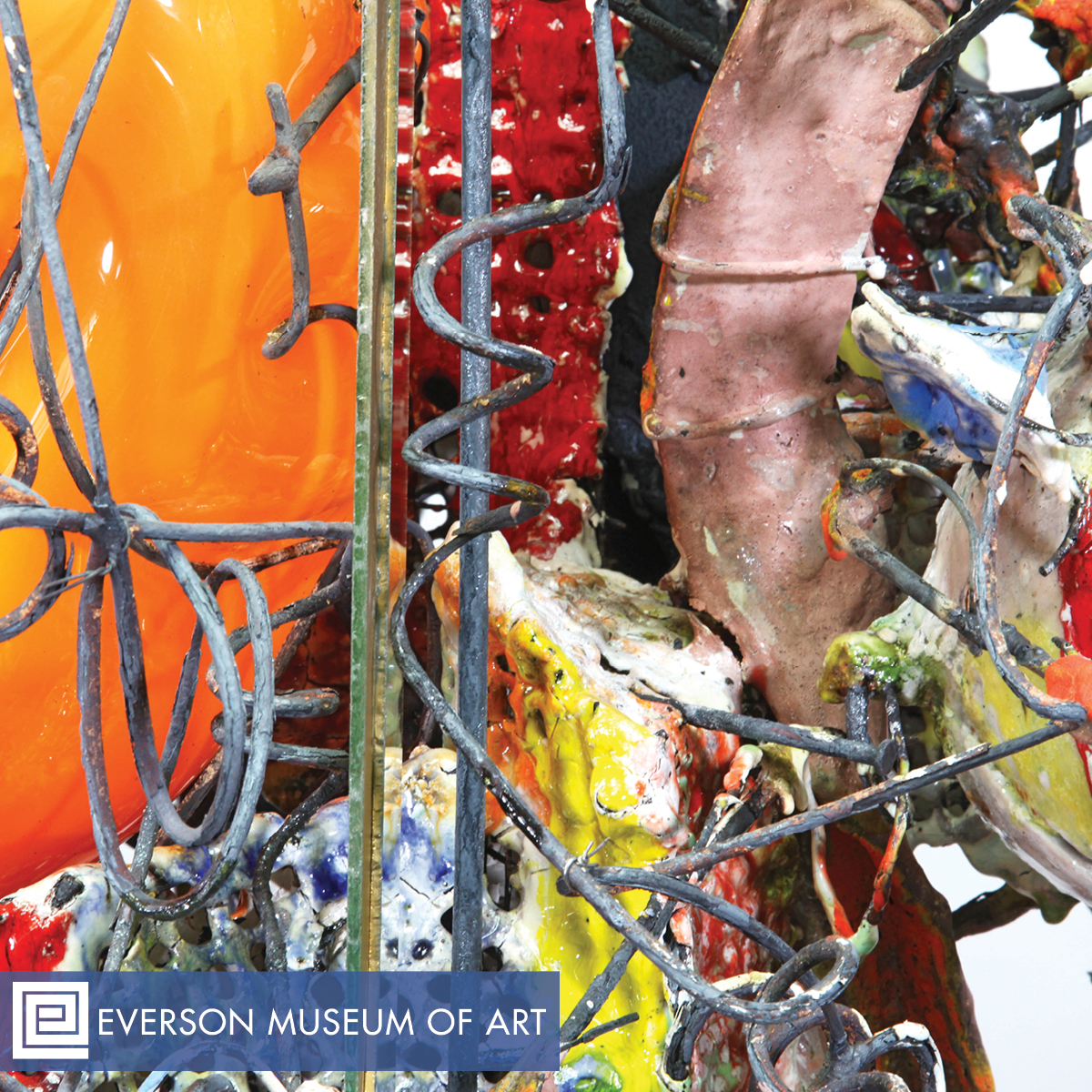
Structure/Dissonance celebrates nearly five decades of work by New York-based artist Raymon Elozua, who first came to prominence in the 1970s with detailed trompe l’oeil ceramic sculptures of decaying industrial landscapes. The artist’s first major museum exhibition since his 2003 retrospective at the Mint Museum, Structure/Dissonance focuses on three conceptual bodies of work that explore the combined physical properties of three elemental materials: ceramic, glass, and steel. This exhibition contextualizes these vital sculptures within Elozua’s intellectual landscape through the inclusion of a series of collections and research projects that are inextricably linked to his artistic output.

Elozua’s insatiable appetite to uncover the hidden cultural meanings attached to his chosen materials has led him to obsessively collect esoteric objects like gas stove burners and rusted enamel cookware, as well as photographs and ephemera related to topics as varied as labor history and decaying “borscht belt” bungalow colonies. These collections and obsessions help to construct a more accurate picture of the complex intellect that gives depth and meaning to Elozua’s singular expressive sculptures.

ORIGINAL LOCATION


THE EVERSON MUSEUM OF ART

Syracuse, NY | September 10 – December 31, 2022

PAST PROGRAMMING & MEDIA


ABOUT THE EVERSON MUSEUM OF ART

401 Harrison Street, Syracuse, NY 13202


The Everson Museum of Art was founded in 1897 as the Syracuse Museum of Fine Arts, and was the first museum dedicated to collecting American art.

The Everson is home to over 11,000 works of art including paintings, sculpture, works on paper, photographs, a pioneering video art collection, and one of the largest ceramics collections in the country.

GUIDE


Raymon Elozua studied political science, sculpture and theater at the University of Chicago. These diverse and varied interests still hold a place within his visual arts practice, encompassing glass and ceramics-metal sculptures, photography and overall interest in historical ephemera.

Elozua is the recipient of numerous awards, including the 2015 Virginia Groot Foundation, as well as numerous National Endowment for the Arts Grants in Sculpture, Ceramics, and Paintings. Elozua is widely represented in private, corporate and museum collections throughout the USA.

SERIES GLOSSARY

To find a form that accommodates the mess, that is the task of the artist now. – Samuel Beckett

We are each a collection of experiences, memories, dreams, actions, sins, fears, interests and so forth. We move along, gathering more and more experiences in our perceived continuum of time. Ultimately they all devolve into hazy fragments. Our lived experiences become puzzles to decipher. How do we integrate all we are into a cohesive whole or soul so that we can be peaceful and holistic?

Clarity in Confusion is a body of work that seeks inspiration from the artist’s personal interior landscape. I create entropic sculptures that decay, are always flaking, cracking, and disintegrating. This is a reminder and reflection of the human condition and ultimately our death. Rather than struggle to assemble the shards of our experiences and history, the task is to accept the confusion and uncertainty. In that acceptance comes a sense of clarity.

In 2018, I decided to return to glass again in conjunction with ceramic and steel. Once more, I worked with Lorin Silverman; this time at Urban Glass in Brooklyn. In addition to blown glass, I was interested in using mirror strips similar in nature to the enamelware photographic setups. The glass was created first. I then constructed a steel structure to suspend the glass shapes, which are removable for the kiln firings. Clay was added and the sculpture was fired for bisque the color. Metal angles were then welded at various angles as a support for two sided mirror strips, which were glued in place.

This series is entitled “Tri-Harmonic” referring to the relationship between glass, ceramic and steel, materials that all use fire and heat as an essential means in their creation.

In the 5th grade at Our Lady Gate of Heaven, our teacher created a contest. Pointing to an image of a state on a map of the USA, each student, standing at the back of the classroom, would have to name the capital of that state.

I studied and studied and was reasonably certain I could win. The only problem, I could not discern the shapes of the state from the back. I asked the nun to keep moving forward until I could clearly see the shapes. Soon I was literally 6 feet away. I knew every capital but I do not recall if she awarded a prize. What I do know is that she called my parents and told them I needed glasses.

Soon I received a pair of new prescription glasses for near sightedness. Already branded a “teacher’s pet, I was now immediately also called “4-eyes.” Despite the negative social implications, what mattered now was that I could see clearly for the first time. Everything was sharp, ordered, and definitive. Eyesight gave me a clarity, even a harshness of vision: the line, the curve, the edge with “level” and “perpendicular” defining space and volume.

Now that my vision is diminishing with age, I remembered this event. I decided to re-create the experience of seeing out of focus. In 2010, utilizing a table top set up of old and new enamelware, I produced a series of richly colored “blurry” images that recalled my first visual experiences.

In 2016, I thought it would be interesting to take these photos, to replace the glowing amorphous shapes in ceramic and steel. I was not successful, hence the title, “Hubris.” Eyesight and clarity prevailed.

R&D

Working in the ceramic medium, I have always been interested in the synthesis of different materials.  From 1989 through 2002, I used steel rod and wire combined with 04 terracotta in my sculptures.  The “skeleton” of the steel provided a way to utilize clay in a more spatial and gravity-defying manner.  

The medium of glass is attractive but I never had an occasion to explore it.  In 2013, I met Lorin Silverman, an expert glassblower and artist.  He worked then for Corning Museum as a technician helping artists to realize their vision in glass.  We researched and developed a way to blow glass into a metal armature.

Glass is perhaps the most difficult medium I have utilized.  Once the glass shapes were created, using CAD drawings I constructed a steel and wire structure, which was then covered with terra cotta and fired multiple times for color to Cone 04.  The glass forms were then independently affixed to the sculptures.

The tension between the fractured ceramic with the reflective glass is fascinating, a feeling of beauty born out of decay.

The work of R&D Sculptures 2014: Ceramic, Steel and Glass was constructed, March 2013 – May 2014.

Video by the Everson Museum of Art/ Music by: The High Llamas

Raymon Elozua: STRUCTURE & DISSONANCE
Everson Museum of Art Exhibition Catalog

Structure/Dissonance celebrates nearly five decades of work by New York-based artist Raymon Elozua, who first came to prominence in the 1970s with detailed trompe l’oeil ceramic sculptures of decaying industrial landscapes. Elozua’s first major museum exhibition since his 2003 retrospective at the Mint Museum, Structure/Dissonance focuses on three conceptual bodies of work that explore the combined physical properties of three elemental materials: ceramic, glass, and steel. This exhibition contextualizes these vital sculptures within Elozua’s intellectual landscape through the inclusion of a series of collections and research projects that are inextricably linked to his artistic output.

  • September 10—December 31, 2022 at the Everson Museum of Art in Syracuse, NY – curated by Garth Johnson
  • Catalog features essays by Johnson, Maria Porges, and Thyrza Nichols Goodeve, 2022
  • Published on 
CHRIS ANTEMANN: An Occasion to Gather

CHRIS ANTEMANN: An Occasion to Gather

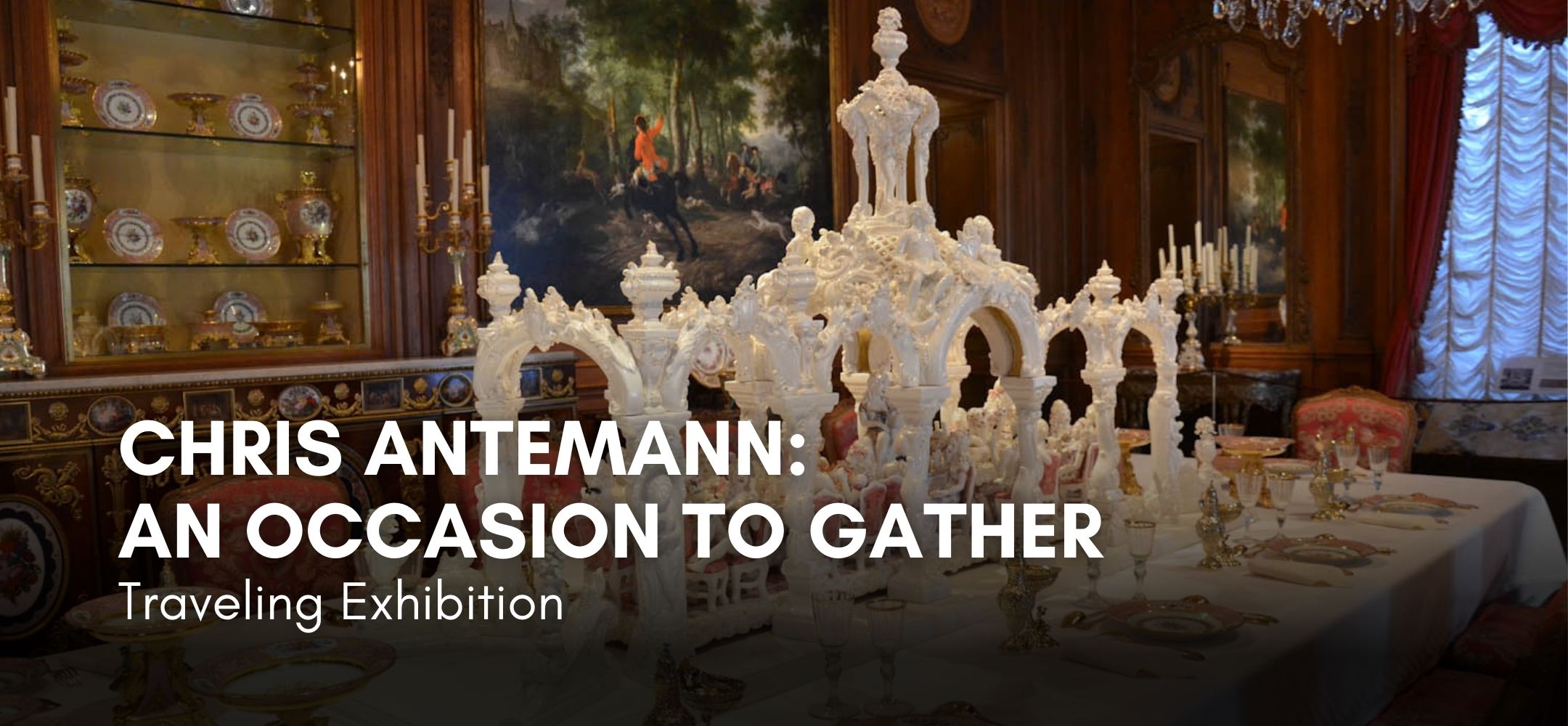
In conjunction with the exhibition The Luxury of Clay: Porcelain Past and Present, organized by Rebecca Tilles, Curator of 18th-century Western European Art, a selection of contemporary ceramics by artist Chris Antemann can be viewed interspersed among the objects from Hillwood’s permanent collection in the dining and breakfast rooms on the first floor of the mansion. The installation is the fourth in a series of Hillwood collaborations with contemporary ceramicists including Eva Zeisel (2005), Bouke de Vries (2019), and Vladimir Kanevsky (2021). On view through June 26, 2022.

Images courtesy of Hillwood & Ferrin Contemporary

An Occasion to Gather


Installation at Hillwood Estate, Museum, & Gardens

Chris Antemann’s elaborate porcelain centerpiece—depicting a host of partially clad revelers gathered around a table under an impressive porcelain temple—is a celebration of the eighteenth-century banqueting craze among European elites. Antemann takes inspiration from historical engravings and eighteenth-century Meissen centerpieces, including the Temple of Love, designed by Johann Joachim Kändler while the factory’s chief modeler.

A Stage for Dessert


Installation at Hillwood Estate & Gardens

“An Occasion to Gather” Chris Antemann’s porcelain centerpiece, is filled with 18th-century style ceramic sweets, takes inspiration from the garden sculptures and eighteenth-century design of Hillwood’s French parterre. As with the dining room table display, here Antemann references eighteenth-century dining culture and the porcelain centerpieces commonly used as table decoration by European elites.

In the adjacent breakfast room,

Harbor (AP)


More on the Collaboration with MEISSEN  •  HERE  •

I am fascinated by 18th-century porcelain figures and what made them so popular: a culture of ritual at the court, with its costumes, powdered wigs, painted faces, and that infatuation with banquets and the extremely complex way of presenting serving platters ‘à la française’ at feasts or receptions. I use the esthetic of those figurines, very modish in France at that time, to recount and parody the relationship between men and women in society or seduction.

-Chris Antemann

MORE ON CHRIS ANTEMANN


View More by Chris Antemann  •  HERE  •

Chris Antemann is known for work inspired by 18th-century porcelain figurines, employing a unity of design and concept to simultaneously examine and parody male and female relationship roles. Characters, themes, and incidents build upon each other, effectively forming their own language that speaks about domestic rites, social etiquette, and taboos. Themes from the classics and the romantics are given a contemporary edge; elaborate dinner parties, picnic luncheons, and ornamental gardens set the stage for her twisted tales to unfold.

DACHA & MANSION INSTALLATIONS


PAST PROGRAMMING

The allure of porcelain has beguiled collectors and others for centuries. Challenging as well as costly to produce, porcelain’s material qualities—impermeable, extremely hard, translucent, and a brilliant white—brought it great esteem early on. Porcelain originated in China, and the competition to manufacture it in Europe was fierce. European manufactories often appropriated designs from one another and recruited workers from their rivals with knowledge of the long-guarded formula.

The Luxury of Clay: Porcelain Past and Present traces the discovery and early history of porcelain in western Europe and Russia in the eighteenth and nineteenth centuries while also highlighting Marjorie Merriweather Posts’s interest in porcelain objects and the pieces she acquired. Juxtaposed to historical porcelain wares are a selection of contemporary ceramics taking cues from porcelain traditions and historical models from Europe and Asia.

Throughout the exhibition works by the contemporary artists and ceramists Cindy Sherman (b. 1954), Bouke de Vries (b. 1960) and Chris Antemann (b. 1971) underscore the continued inspiration and influence of historical porcelain on artists today.

EXHIBITING ARTISTS


Hillwood Estate, Museum & Gardens Related Programs

Explore stories behind porcelain past and present.


In this lecture celebrating the installation of two elaborate centerpieces in the dining and breakfast rooms as part of The Luxury of Clay: Porcelain Past and Present, artist Chris Antemann describes the development of her ceramic artwork inspired by eighteenth-century porcelain figures.

Rebecca Tilles, curator, explores the porcelain collections of Consuelo Vanderbilt (1877-1964), Anna Thompson Dodge (1871-1970), and Marjorie Merriweather Post (1887-1973), Hillwood’s founder.

VIDEOS FEATURING CHRIS ANTEMANN


Rebecca Tilles, curator, explores the porcelain collections of Consuelo Vanderbilt (1877-1964), Anna Thompson Dodge (1871-1970), and Marjorie Merriweather Post (1887-1973), Hillwood’s founder.

In this lecture celebrating the installation of two elaborate centerpieces in the dining and breakfast rooms as part of “The Luxury of Clay: Porcelain Past and Present,” artist Chris Antemann describes the development of her ceramic artwork inspired by eighteenth-century porcelain figures. She will discuss how she drew inspiration from Hillwood’s French parterre, porcelain collection, and interiors, as well as many other sources for her sculptural tableaux and complex process of constructing them. Learn how Chris crafts new narratives from historical forms, informed by her ten-year collaboration on unique and limited edition artworks with MEISSEN, Europe’s oldest porcelain manufactory.

MELTING POINT

MELTING POINT

HELLER GALLERY

303 10th Avenue, New York, NY

FERRIN CONTEMPORARY

1315 MASS MoCA Way, North Adams MA

Original location duration:
June 24 – September 25, 2021

ABOUT THE EXHIBITION


The Melting Point is the degree when solid becomes soft, eventually becoming liquid and a boiling point is reached. Glaze melts, clay and glass soften, surface and form become pliable. This exhibition surveys a ​diverse ​group of artists whose use of the melting point is central to their practice.

Used metaphorically, as the planet warms we are finding ourselves closer to the melting point both physically and socially. In 2020, forces combined under pressure of the COVID-19 virus, politics exploded and nature responded with melting ice, raging fires, and extreme weather. Likewise, artists use the melting point as a metaphor in their work to express their political beliefs and sound the alarm using the fragile materials of glass and ceramic.

The exhibition is ​a ​collaboration​ between Ferrin Contemporary in North Adams, MA on the MASS MoCA campus and ​Heller Gallery, located in the Chelsea Art District of New York City​. The co-curators and gallery directors are renowned specialists in their fields, Leslie Ferrin (ceramics) and Katya Heller (glass).

VIEW THE EXHIBITION CATALOG HERE

PRESENTATION at Ferrin Contemporary, 2021


PRESENTATION at Heller Gallery, 2021


EXHIBITING ARTISTS


PAST PROGRAMMING


SELECT PRESS:

MELTING POINT in the Boston Globe
8.5.21 Cate McQuaid gives a quick glance at the exhibition in The Ticket section of The Boston Globe.

Arriving at the MELTING POINT in Destination Williamstown
7.20.21 Destination Williamstown interviews Ferrin Contemporary Director Leslie Ferrin and gets to the historical heart of MELTING POINT.

BUSINESS MONDAY: Did people buy art during COVID? 
6.28.21 Julia Dickson of The Berkshire Eagle reports on a “difficult but successful” year for Berkshire gallerists.

NATURE/NURTURE

NATURE/NURTURE

2021 | NATURE/NURTURE II

NCECA 2021 Virtual Conference
Rivers, Reflections, and Reinvention
March 17, 2021 – March 21, 2021

Gallery Presentation
1315 MASS MoCA Way, North Adams
March 17, 2021 – May 29, 2021

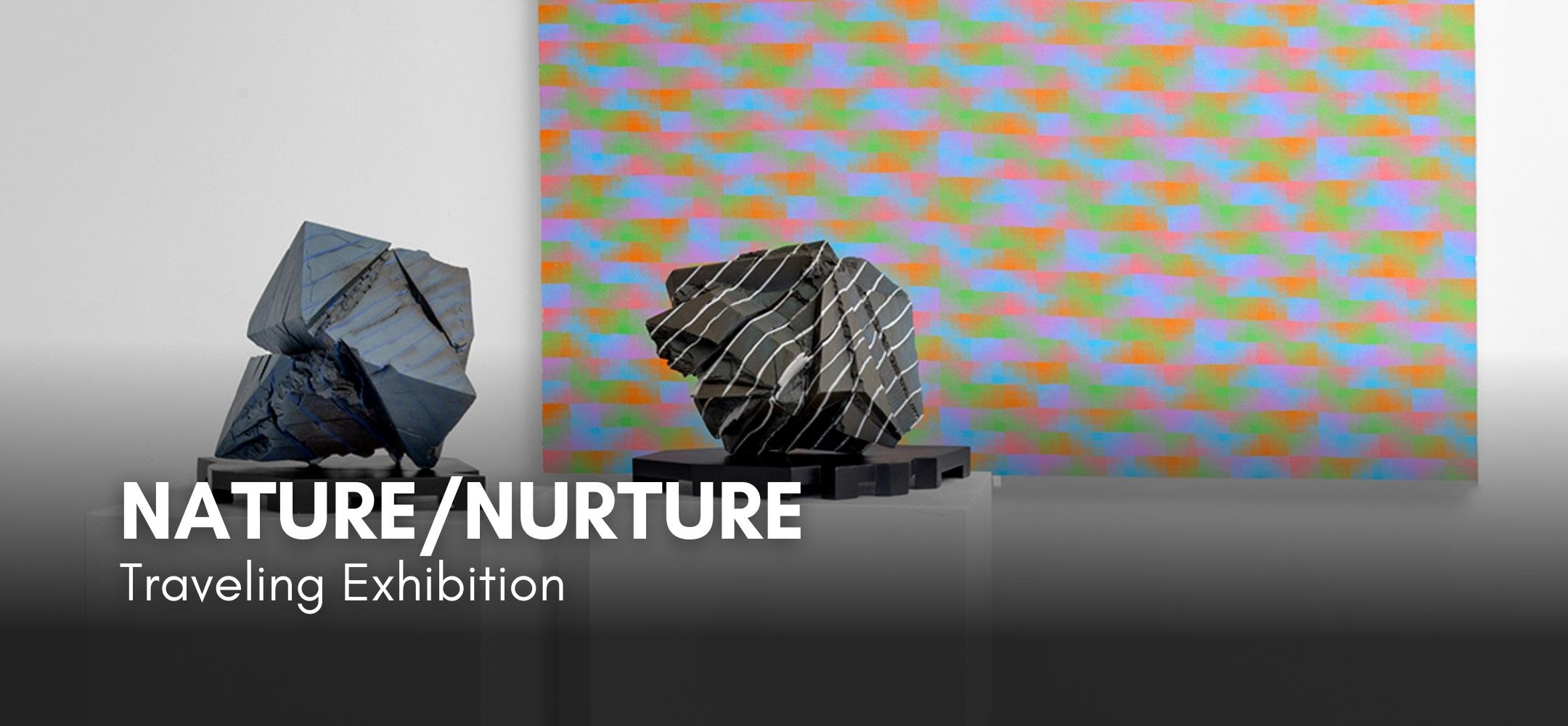
In March 2020 we invited a group of women artists to explore the influence of gender and its impact on their creative practice. This year, Nature/Nurture returns with new additional works as a virtual exhibition at NCECA’s first virtual conference, with select works on view at Ferrin Contemporary.

ABOUT THE EXHIBITION

2020 | NATURE/NURTURE

1315 MASS MoCA Way, North Adams
March 4 – June 27, 2020

Ferrin Contemporary is pleased to present Nature/Nurture, a group exhibition of twelve contemporary female artists invited to explore the influence of gender and its impact on their practice.

This timely exhibition explores these ideas that range from direct interpretations of the natural world to more abstract notions, such as the construction of gender and the endowed role of women within their personal and professional careers. Works in clay range in form from individual vessels to composed still lifes and figural and abstract sculpture.

Gallery director Leslie Ferrin chose a group of twelve female artists whose works and careers provide a range of diverse perspectives related to age, cultural identity and work being done in contemporary ceramics. Considering the impact that the #MeToo movement is having on all professions, Ferrin asked the artists to pause and reflect on the role gender plays in their artistic practice and to consider the nurturing experiences that have shaped them.

Ferrin writes, “A renewed awareness and galvanizing commitment for change is surging through American cultural and academic institutions, organizations and businesses of every sort, exposing the crying need for structural change; specifically, the advancement of equality for artists of all genders and elimination of sexual harassment, wage discrimination and other forms of sexism that continue to affect the lives of women, transgender and non-binary individuals. As part of the movement to reverse and rebalance with new priorities and opening doors, it is crucial to offer opportunities to artists who have been historically marginalized.”

Nature assigned these artists, who identify as female, on a given path, whereas nurture is an accumulation of experiences, influences and impact with both positive and negative results on personal and professional lives. Seen as a whole, this group of twelve women artists who live and work throughout the USA, is representative of the rising tide of professional opportunities for women artists. While significant earnings and advancement gaps remain, a course correction is underway through the increasing number of gender and culturally specific exhibitions. As priorities shift for museum collections, educational public programming and private collectors, these efforts to course-correct are bringing recognition to artists previously overlooked and undervalued and to undocumented legacies. Nature/Nurture seeks to contribute to and further this recognition.

Inspired by the important work of Judith Butler and Helen Longino, the artists in the show were invited to explore the influence of ‘Nature/Nurture’ within their practice. The work ranges from more direct interpretations of the natural world, to more abstract notions, such as the construction of gender, and endowed role of women.

“Possibility is not a luxury; it is as crucial as bread.”
― Judith Butler, Undoing Gender, 2004

INSTALLATION PHOTOS

ARTWORK PHOTOS

PRESS & FEATURES