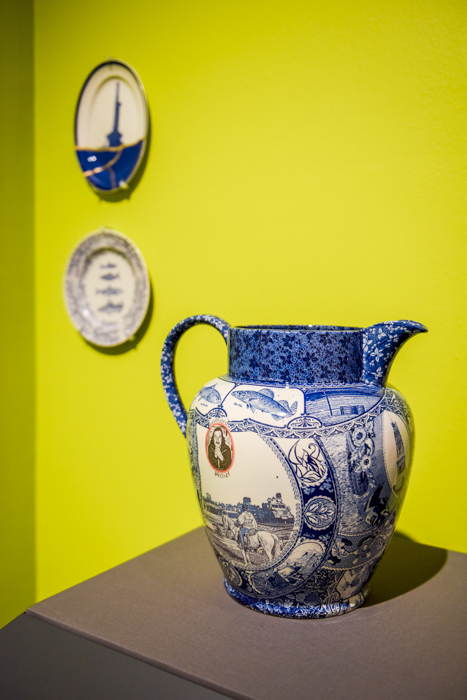
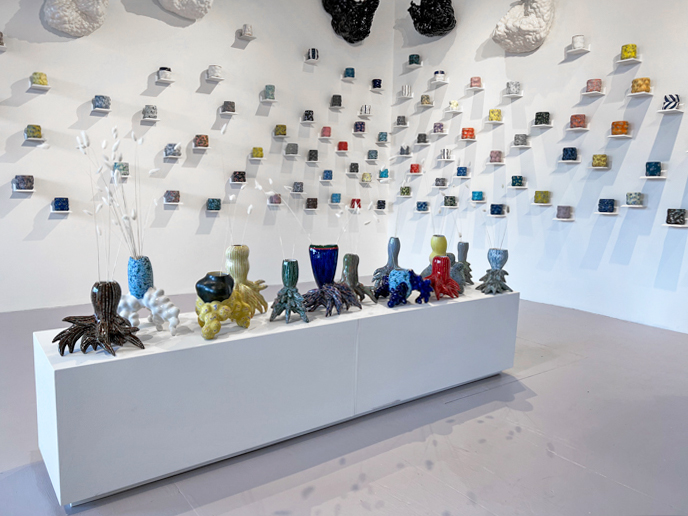
If you walk through the galleries at Mint Museum Randolph, the art is largely organized by region, type, or era. There are galleries for European art, African art, art of the Ancient Americas, Native American art, and decorative arts. However, within some of these galleries, there are works displayed that are “out of place” or “out of time.” Interventions seek to question the past against the present by placing contemporary artworks alongside works from other eras.
Interventions: Portals to the Past: British Ceramics 1675 – 1825
This exhibition presents over 200 examples of British ceramics. Visitors can learn about these pieces’ functions, styles, manufacturing techniques, and makers. Each region or manufacturer had a unique style and method of creating ceramics, which can be seen in the wide variety of works on display. Included in the exhibition are traditional styles like blue and white Delftware, vessels made to look like vegetables or fruits, commemorative teacups, allegorical figures, decorative figurines of animals, and many more. You can view an online version of this exhibition here.
This exhibition already invites the viewer to analyze our relationship to the past by means of its title. However, in bringing contemporary pieces to this gallery, we can find new ways of looking at a medium’s influence on our present-day society.
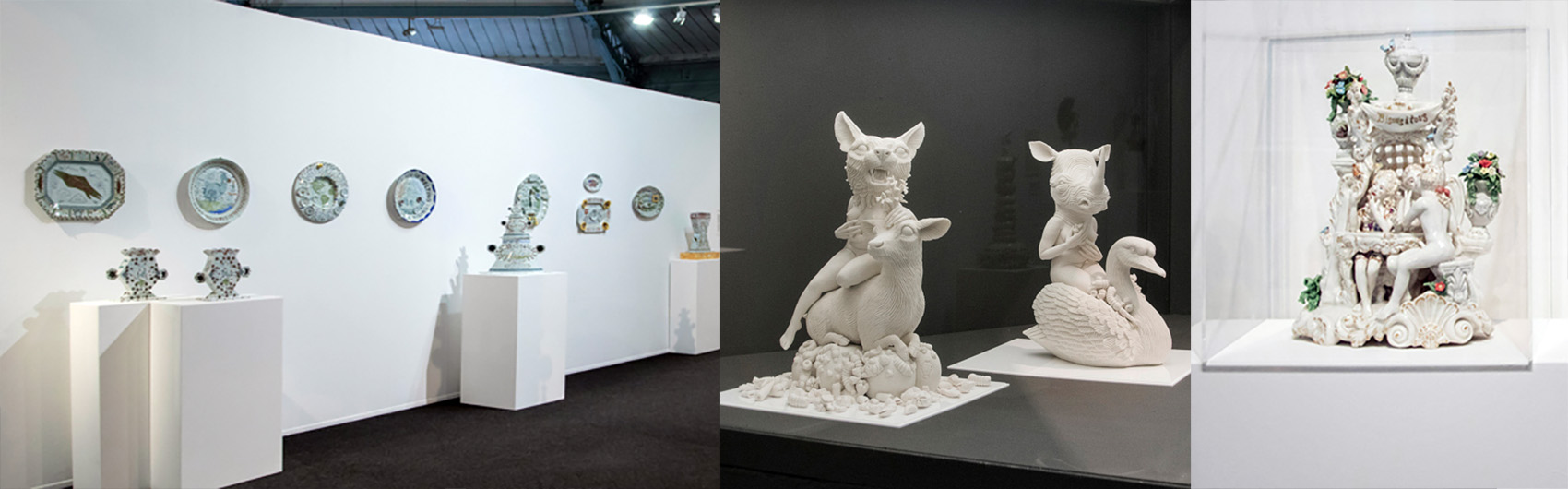
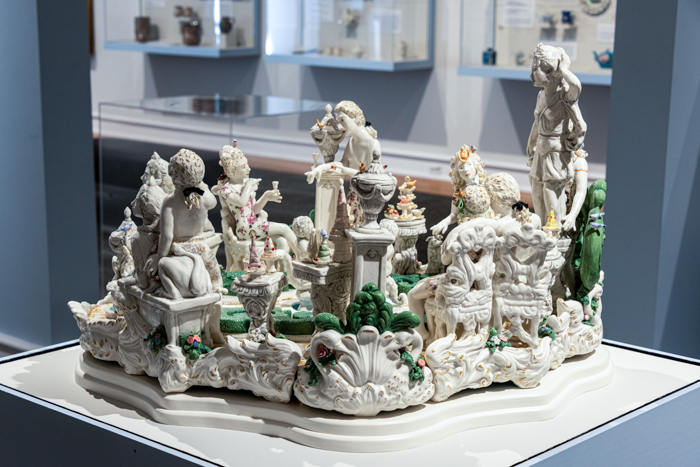
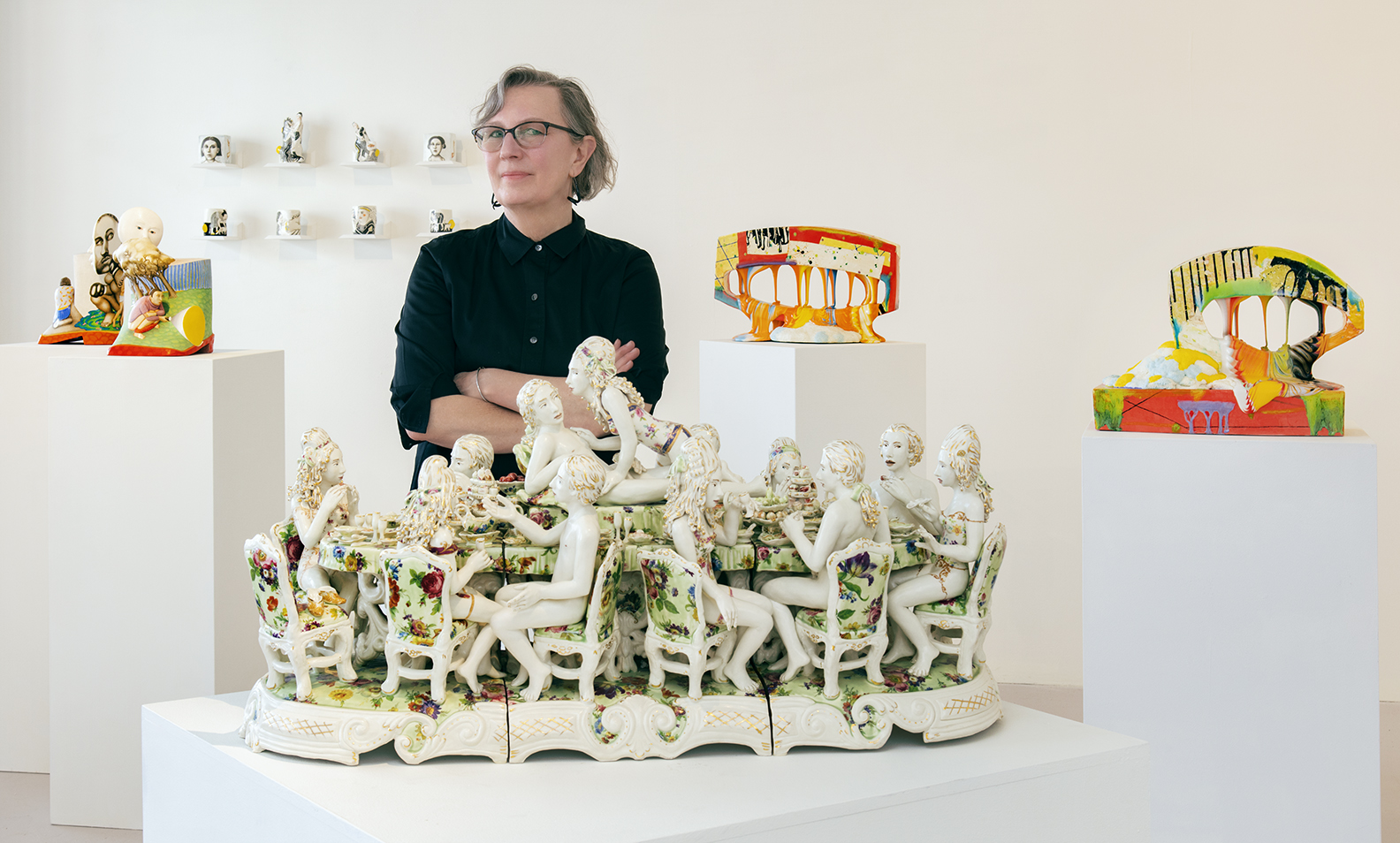
Antemann’s work proves that the art of ceramics is still relevant, but its function has changed. Her art focuses on how ceramics exist in the domestic lives of those who own them and what meanings are ascribed to them. Her style is based on that of 18th-century ceramics because she believes that recreating traditions allows us to find new interpretations in the present.
This meeting of past and present is clear in Antemann’s A Stage for Dessert. Numerous figures stand around at a dessert banquet in lively, lighthearted positions. However, Antemann is joking with the viewer to comment on the flirtatious, playful, or even risqué nature of the figures. What could once signify a deep meaning to a 19th-century owner, such as an allegory or a representation of a season, has been adapted into a less serious object.
Information courtesy of mint.wiko.pbworks.com